Introduction
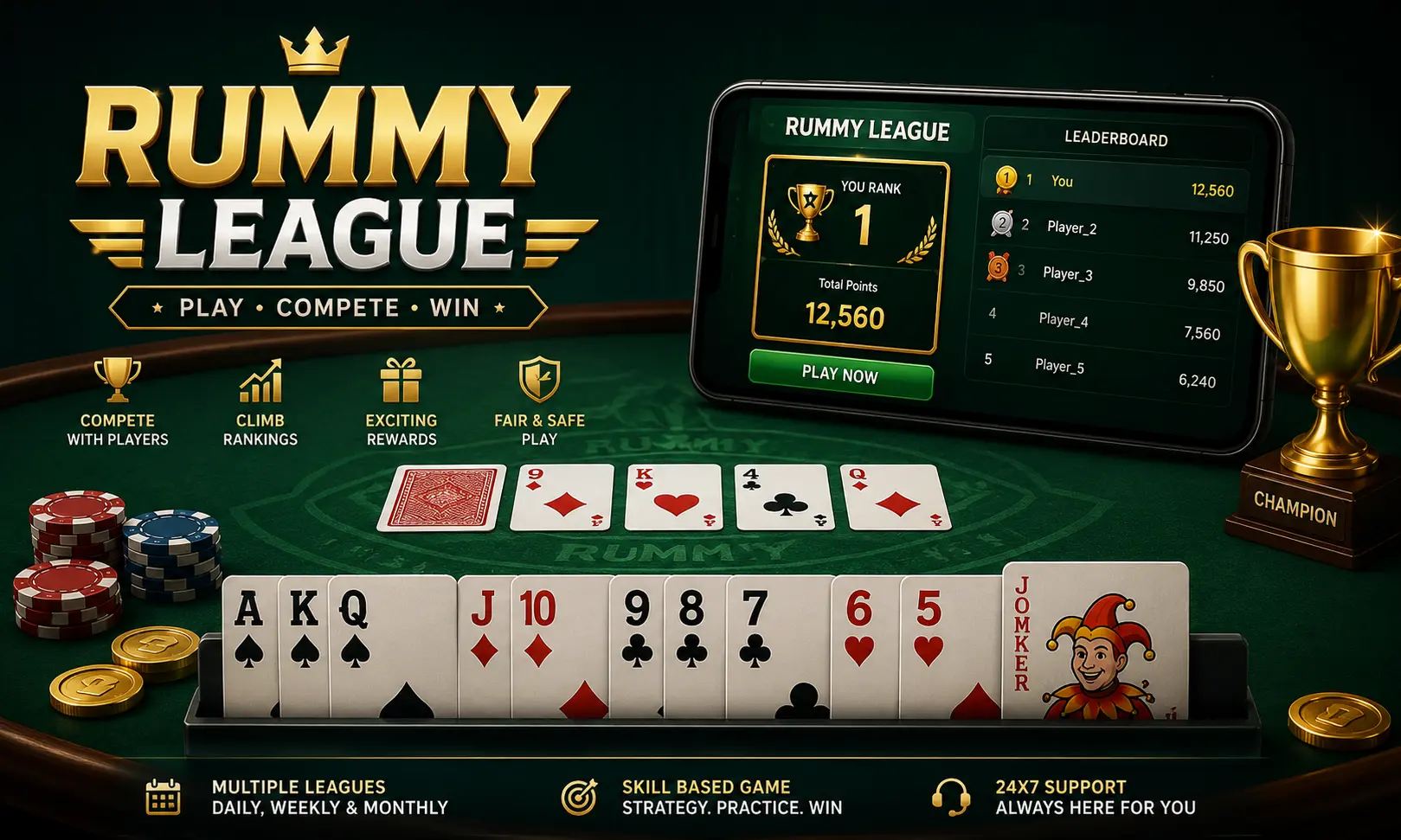
The online gaming industry has experienced remarkable growth over the last decade, and among all skill-based card games, Rummy League has emerged as one of the most exciting and competitive formats. Players from different skill levels join leagues, compete against opponents, earn points, climb leaderboards, and win rewards based on their performance.
Unlike traditional casual rummy games, a rummy league introduces a structured competition format that rewards consistency, strategy, and long-term performance. Whether you are a beginner learning the basics or an experienced player looking to dominate league rankings, understanding how a rummy league works can significantly improve your results.
In this comprehensive guide, we will explore everything about rummy leagues, including rules, gameplay mechanics, benefits, strategies, scoring systems, winning tips, mistakes to avoid, and future trends.
Table of Contents
- What Is Rummy League?
- History and Evolution of Rummy Leagues
- How Rummy League Works
- Types of Rummy League Formats
- Basic Rules of Rummy
- League Point Systems Explained
- Benefits of Joining a Rummy League
- Essential Skills Needed for Success
- Advanced Winning Strategies
- Common Mistakes Players Make
- Bankroll Management Tips
- Mobile Gaming and Rummy Leagues
- Future of Online Rummy Leagues
- Frequently Asked Questions
- Conclusion
What Is Rummy League?
A Rummy League is a competitive format where players participate in multiple rummy matches over a specific period and earn points based on their performance.
Instead of playing a single game and ending the competition immediately, league formats allow players to:
- Earn cumulative points
- Improve rankings
- Compete against many opponents
- Win seasonal rewards
- Unlock achievements
- Gain recognition on leaderboards
The concept is similar to sports leagues where teams accumulate points throughout a season.
Key Characteristics of a Rummy League
- Long-term competition
- Leaderboard rankings
- Performance-based rewards
- Multiple game rounds
- Skill-focused environment
- Strategic progression system
This structure makes rummy leagues highly engaging and rewarding for serious players.
 Rummy
Rummy
Shiva Verma| Jun 17, 2026| 16 min read
Rummy New: The Ultimate Guide to New Rummy Games, Strategies, and Winning Tips in 2026
History and Evolution of Rummy Leagues
Rummy originated centuries ago and evolved into numerous variants worldwide.
Traditional Rummy Era
Initially, players competed in:
- Family gatherings
- Social clubs
- Community events
- Offline tournaments
Success depended largely on personal skill and experience.
Online Transformation
The digital revolution introduced online rummy platforms where players could:
- Join games instantly
- Play with global opponents
- Participate in tournaments
- Track statistics
This transformation paved the way for modern rummy leagues.
Rise of Competitive Leagues
Developers recognized that players enjoyed ongoing competition rather than isolated games.
As a result, structured league systems were introduced featuring:
- Daily leagues
- Weekly leagues
- Monthly leagues
- Seasonal championships
Today, rummy leagues are among the most popular competitive card gaming formats.
How Rummy League Works
Understanding the mechanics of a rummy league is crucial for maximizing your success.
Step 1: Registration
Players join a league through an online platform.
Registration may involve:
- Creating an account
- Choosing a league tier
- Accepting league rules
- Meeting eligibility requirements
Step 2: Playing Matches
Once enrolled, players participate in multiple matches.
Each match contributes to their overall league score.
Possible formats include:
Points Rummy
Players earn points based on performance.
Pool Rummy
Players compete until elimination.
Deals Rummy
Fixed-number deals determine rankings.
Step 3: Earning League Points
League standings depend on accumulated points.
Points are typically awarded for:
- Wins
- Consistent performance
- High rankings
- Streak bonuses
- Tournament placements
Step 4: Climbing the Leaderboard
Every league maintains a leaderboard.
The leaderboard shows:
- Rank
- Total points
- Matches played
- Win percentage
- Recent performance
Higher positions often result in better rewards.
Step 5: Reward Distribution
At the end of the league cycle, rewards are distributed based on rankings.
Rewards may include:
- Bonus chips
- Tournament tickets
- Exclusive badges
- Cash prizes (where legally permitted)
- VIP benefits
 Rummy
Rummy
Shiva Verma| Jun 15, 2026| 17 min read
Rummy Loot: The Complete Guide to Playing, Winning, Bonuses, and Maximizing Rewards
Types of Rummy League Formats
Different platforms offer various league structures.
Daily Leagues
Daily leagues reset every 24 hours.
Advantages
- Fast competition
- Quick rewards
- Frequent opportunities
Best For
- Casual players
- Beginners
- Short-session gamers
Weekly Leagues
Weekly competitions provide a balance between skill and consistency.
Benefits
- More strategic depth
- Better ranking opportunities
- Reduced randomness
Suitable For
- Intermediate players
- Regular competitors
Monthly Leagues
Monthly leagues are among the most prestigious.
Features
- Larger player pools
- Bigger rewards
- Advanced competition
Ideal For
- Dedicated players
- Experienced competitors
Seasonal Championships
Seasonal leagues may last several months.
These events often feature:
- Elite competition
- Massive prize pools
- Qualification stages
- Championship finals
Basic Rules of Rummy
Before competing in a league, players must understand standard rummy rules.
Objective
The goal is to arrange cards into:
- Valid sequences
- Valid sets
And declare before opponents.
Card Distribution
Typically:
- 2 players receive 10 cards
- 3–6 players receive 13 cards
One card remains open to start the discard pile.
Pure Sequence
A pure sequence consists of consecutive cards from the same suit without a joker.
Example
- 4♥ 5♥ 6♥
A pure sequence is mandatory for a valid declaration.
Impure Sequence
An impure sequence uses a joker.
Example
- 7♠ 8♠ Joker 10♠
This remains a valid sequence.
Sets
A set contains cards of the same rank but different suits.
Example
- 9♣ 9♦ 9♥
This forms a valid set.
Winning Declaration
To win:
- At least one pure sequence
- Additional valid sequences or sets
- Correct arrangement of all cards
An invalid declaration leads to penalties.
 Rummy
Rummy
SH Shiva Verma| Jun 14, 2026| 18 min read
Rummy Bonus: The Complete Guide to Bonuses, Rewards, and Winning Opportunities in Online Rummy
League Point Systems Explained
League scoring varies across platforms.
Win-Based Scoring
Simple systems reward victories.
Example:
- Win = 10 points
- Loss = 0 points
Placement-Based Scoring
Rankings determine points.
Example:
| Position | Points |
|---|---|
| 1st | 20 |
| 2nd | 15 |
| 3rd | 10 |
| 4th | 5 |
Performance Bonuses
Many leagues offer extra points for:
- Winning streaks
- Fast declarations
- Consistent rankings
- High participation
Penalty Systems
Some leagues deduct points for:
- Inactivity
- Invalid declarations
- Frequent losses
- Rule violations
 Rummy
Rummy
SH Shiva Verma| Jun 14, 2026| 17 min read
All Rummy Game: The Ultimate Guide to Online Rummy, Rules, Strategies, Variations, and Winning Tips
Benefits of Joining a Rummy League
Rummy leagues offer several advantages beyond entertainment.
Improved Skills
Regular competition helps players:
- Analyze opponents
- Build strategies
- Improve decision-making
- Learn probability concepts
Competitive Environment
League formats encourage continuous improvement.
Players encounter:
- Diverse opponents
- Advanced tactics
- New challenges
This accelerates learning.
Better Rewards
Compared to casual games, leagues often provide:
- Larger prize pools
- Seasonal bonuses
- Exclusive rewards
Community Engagement
Players become part of a competitive community where they can:
- Track rankings
- Participate in events
- Learn from top performers
Long-Term Motivation
Leaderboards create ongoing motivation to improve performance and maintain consistency.
Essential Skills Needed for Success
Success in a rummy league requires more than luck.
Observation Skills
Watch:
- Opponent discards
- Picked cards
- Playing patterns
Observation helps predict opponents’ hands.
Memory
Remembering discarded cards improves decision-making significantly.
Strong memory skills provide a competitive edge.
Risk Assessment
Every move involves risk.
Top players evaluate:
- Potential gains
- Possible losses
- Opponent intentions
before making decisions.
Patience
League success depends on consistency rather than aggressive play in every match.
Patient players often achieve higher rankings.
Adaptability
Different opponents require different approaches.
The ability to adjust strategies is essential for long-term success.
Why Rummy League Is Becoming More Popular
Several factors contribute to the growing popularity of rummy leagues:
Accessibility
Players can join from:
- Smartphones
- Tablets
- Laptops
- Desktop computers
Competitive Excitement
Leaderboards create an engaging experience that encourages regular participation.
Skill-Based Gameplay
Unlike purely chance-based games, rummy rewards strategic thinking and decision-making.
Social Features
Modern platforms include:
- Chat systems
- Friend lists
- Team events
- Community tournaments
These features enhance player engagement.
Advanced Rummy League Strategies
While beginners focus on learning the rules, successful league players understand that strategy is the key factor that separates average players from top-ranked competitors.
Prioritize the Pure Sequence Early
One of the smartest moves in any rummy league match is forming a pure sequence as early as possible.
Why is this important?
- It reduces the risk of invalid declarations.
- It creates a solid foundation for the remaining cards.
- It allows greater flexibility in hand management.
Experienced players usually focus on completing a pure sequence before working on sets or impure sequences.
Track Opponent Behavior
Every discard provides valuable information.
Pay attention to:
- Cards opponents pick.
- Cards opponents discard.
- Repeated suit selections.
- Joker usage patterns.
By observing carefully, you can estimate the combinations your opponents are attempting to build.
This information helps you avoid giving away useful cards.
Use Jokers Wisely
Jokers are among the most powerful cards in rummy.
However, many players waste them on weak combinations.
Smart joker usage includes:
- Completing difficult sequences.
- Finishing high-value combinations.
- Reducing deadwood cards.
Avoid using jokers for combinations that can easily be completed naturally.
Discard High-Value Cards Early
Cards such as:
- King
- Queen
- Jack
- Ace
carry high penalty values.
If these cards do not contribute to potential sequences or sets, discard them early.
This strategy minimizes losses if an opponent declares unexpectedly.
Analyze League Standings
League play differs from standard rummy because rankings matter.
Sometimes it is smarter to:
- Protect points.
- Avoid risky moves.
- Maintain consistent performance.
League champions often prioritize long-term leaderboard success over individual match aggression.
Expert Winning Tips for Rummy League Players
Focus on Consistency
Winning every game is unrealistic.
Instead, focus on:
- Regular top finishes.
- Reduced penalties.
- Stable performance.
Consistency often wins leagues more effectively than occasional victories.
Practice Different Variants
Most leagues include multiple formats.
Become comfortable with:
Points Rummy
Fast-paced and aggressive.
Pool Rummy
Requires survival skills.
Deals Rummy
Demands long-term planning.
Versatility makes players more competitive across league formats.
Manage Emotional Decisions
One bad match should not affect future games.
Successful players remain calm after:
- Losses
- Mistakes
- Unexpected declarations
Emotional control is often overlooked but extremely important.
Study Successful Players
Leaderboard leaders often reveal useful patterns.
Observe:
- Their match frequency.
- Risk-taking tendencies.
- Card management approaches.
- Declaration timing.
Learning from successful competitors accelerates improvement.
Play During Peak Focus Hours
Your concentration level directly impacts performance.
Avoid playing when:
- Tired
- Distracted
- Stressed
League success often comes from quality play rather than excessive volume.
Common Mistakes to Avoid in Rummy League
Even skilled players make costly errors.
Understanding these mistakes can significantly improve results.
Ignoring the Pure Sequence
Many beginners focus on sets first.
Without a pure sequence, declarations become invalid.
Always prioritize the mandatory sequence.
Holding High Cards Too Long
Players often hope high cards will become useful later.
Unfortunately, these cards can create large penalties.
If they don’t fit your strategy, discard them early.
Overusing Jokers
Jokers should solve difficult problems.
Using them unnecessarily reduces flexibility later in the game.
Revealing Your Strategy
Predictable discards help opponents understand your hand.
Try varying your discarding patterns to avoid giving away information.
Chasing Impossible Combinations
Sometimes players become attached to unlikely sequences.
Recognizing when to abandon a combination is a critical skill.
Adaptability wins more games than stubbornness.
League Ranking Improvement Techniques
Set Daily Targets
Instead of focusing only on winning the league, establish manageable goals.
Examples:
- Play five quality matches.
- Achieve a positive win rate.
- Reduce penalty points.
Small improvements create long-term success.
Review Past Games
Analyze previous matches.
Ask yourself:
- Which cards caused problems?
- Which decisions worked?
- Which mistakes repeated frequently?
Continuous learning is essential.
Track Statistics
Keep records of:
- Win percentage
- Average points earned
- League rankings
- Declaration success rate
Data helps identify strengths and weaknesses.
Develop a Personal Strategy
Every player has unique strengths.
Some excel at aggressive gameplay.
Others perform better with conservative approaches.
Find a style that matches your decision-making process.
Bankroll Management for Competitive Players
Proper bankroll management is crucial for long-term success.
Set a Budget
Never play beyond your planned limits.
Establish:
- Daily limits
- Weekly limits
- Monthly limits
Discipline protects your gaming experience.
Avoid Chasing Losses
A common mistake is increasing stakes after losing.
This often leads to larger losses.
Instead:
- Stay patient.
- Follow your plan.
- Focus on strategy.
Divide Your Funds
Professional players often divide their bankroll into smaller units.
This reduces risk and ensures longer participation.
Focus on Value
Choose league entries that provide:
- Reasonable competition
- Fair rewards
- Sustainable participation
Long-term value matters more than short-term excitement.
Mobile Gaming and Rummy League Growth
The popularity of rummy leagues has increased dramatically due to mobile technology.
Smartphone Accessibility
Players can participate from virtually anywhere.
Advantages include:
- Convenience
- Quick access
- Flexible play schedules
Enhanced User Experience
Modern platforms offer:
- Real-time leaderboards
- Statistics dashboards
- Match history
- Performance tracking
These features improve engagement and learning.
Cross-Platform Integration
Many platforms allow seamless transitions between:
- Mobile devices
- Tablets
- Desktop computers
This flexibility supports continuous participation.
Future of Rummy League Competitions
The future of rummy leagues looks promising.
Several trends are expected to shape the industry.
Artificial Intelligence Integration
AI-powered systems may provide:
- Personalized recommendations
- Skill assessments
- Training suggestions
Players could receive valuable performance insights.
Bigger Competitive Ecosystems
League structures may expand to include:
- Regional championships
- National rankings
- International tournaments
This growth will create more competitive opportunities.
Enhanced Analytics
Advanced statistics will likely become standard.
Players may gain access to:
- Hand analysis
- Decision reviews
- Opponent trends
Data-driven improvement will become increasingly important.
Greater Community Features
Future leagues may include:
- Team-based competitions
- Clubs
- Community rankings
- Social rewards
These additions can increase player engagement.
Final Conclusion
Rummy League represents one of the most exciting developments in online card gaming. Unlike casual rummy matches, league formats reward consistency, skill, discipline, and strategic thinking over an extended period.
Whether you are a beginner learning the basics or an experienced competitor aiming for leaderboard dominance, success in a rummy league depends on mastering core fundamentals, building strong sequences, observing opponents, managing risk, and maintaining emotional control.
The growing popularity of online rummy leagues demonstrates the appeal of structured competition. With mobile accessibility, advanced technology, and increasingly sophisticated league systems, the future of rummy leagues appears brighter than ever.
Players who continuously improve their skills, analyze their performance, and remain disciplined in their approach will have the best chance of climbing rankings and achieving long-term success.
Frequently Asked Questions (FAQs)
A Rummy League is a structured competition where players participate in multiple rummy matches over a specific period and earn points based on their performance. Unlike standard games, league rankings are determined by cumulative results rather than a single match outcome.
Leagues often feature leaderboards, seasonal rewards, achievement systems, and ranking tiers that encourage continuous participation.
Rummy is widely considered a skill-based card game because player decisions significantly influence outcomes.
Important skill factors include:
Card arrangement
Sequence building
Opponent observation
Risk management
Strategic discarding
While card distribution introduces some randomness, long-term success in leagues generally depends on player skill and consistency.
3. How Can Beginners Improve in Rummy Leagues?
Beginners can improve by focusing on:
Learning basic rules thoroughly.
Prioritizing pure sequences.
Practicing regularly.
Studying opponent behavior.
Reviewing past matches.
Improvement comes gradually through experience and analysis. Consistent practice is one of the fastest ways to become competitive.
Common mistakes include:
Ignoring pure sequences.
Holding high-value cards too long.
Making emotional decisions.
Overusing jokers.
Revealing strategy through predictable discards.
Avoiding these mistakes can significantly increase winning percentages and leaderboard performance.
The best long-term strategy combines:
Consistent gameplay.
Strong card observation.
Effective joker usage.
Risk management.
Continuous learning.
Players who focus on steady improvement rather than short-term results typically achieve better rankings over time. League champions often emphasize discipline, patience,
Leave a Reply