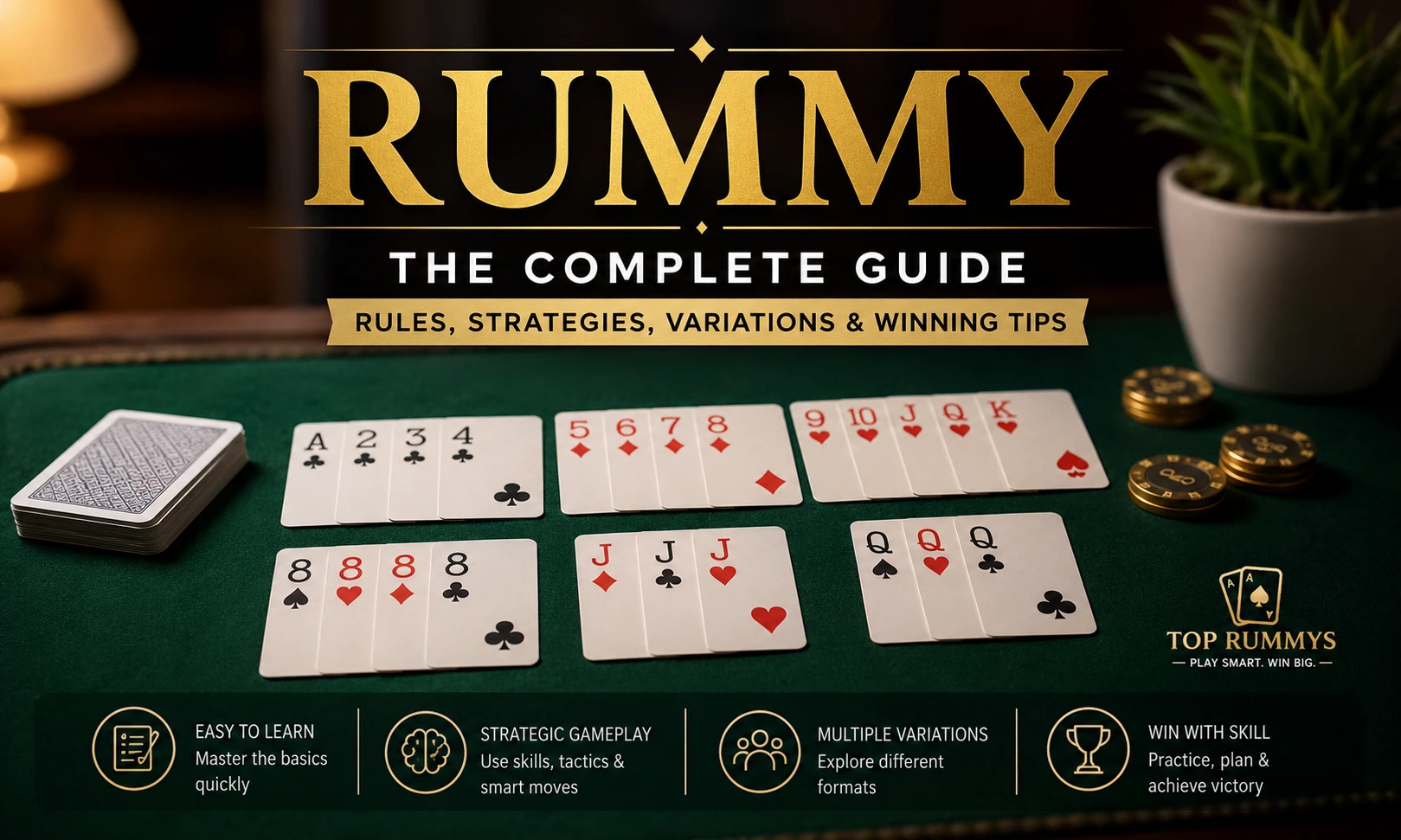
Rummy is one of the most popular card games in the world, enjoyed by millions of players across different countries and cultures. Whether played casually with family members during holidays or competitively among skilled card enthusiasts, rummy remains a timeless game that combines strategy, observation, memory, and decision-making.
In recent years, the popularity of rummy has expanded beyond traditional card tables and into digital platforms, making it easier than ever for players to learn, practice, and enjoy the game. For those interested in understanding the fundamentals of rummy, learning advanced strategies, and exploring different variations, resources such as TopRummys can help players discover more about the game and its many formats.
This comprehensive guide explores everything you need to know about rummy, including its history, rules, gameplay mechanics, strategies, variations, and the future of this beloved card game.
What Is Rummy?
Rummy is a family of matching-card games where players attempt to arrange cards into valid combinations called melds. These melds typically consist of:
- Sets (cards of the same rank)
- Runs or sequences (consecutive cards of the same suit)
The primary objective is to organize all cards into valid combinations before opponents do. Players draw and discard cards strategically to improve their hands and complete required combinations.
Unlike games that depend heavily on luck, rummy rewards skillful decision-making, observation, and planning.
 Rummy
Rummy
SH Shiva Verma| Jun 10, 2026| 11 min read
Popular Rummy Game: The Complete Guide to India’s Favorite Card Game in 2026
The History of Rummy
The origins of rummy are fascinating and stretch back more than a century. Historians believe the game evolved from older matching-card games and eventually developed into numerous variants played around the globe.
The rummy family includes many well-known versions such as:
- Classic Rummy
- Gin Rummy
- Indian Rummy
- Canasta
- Contract Rummy
- Rummy 500
Researchers generally agree that the modern form of rummy emerged during the late nineteenth and early twentieth centuries and quickly gained popularity worldwide. Today, it remains one of the most recognizable card game families.
Why Rummy Is So Popular
Several factors contribute to the enduring popularity of rummy:
Easy to Learn
New players can understand the basic rules within a short period.
Strategic Depth
Although beginners can start quickly, mastering rummy requires skill and experience.
Social Interaction
Rummy encourages conversation, competition, and entertainment among friends and family.
Multiple Variations
Players can choose from many different formats depending on their preferences.
Suitable for All Ages
The game is accessible to players of various age groups and skill levels.
Basic Components of a Rummy Game
Before learning how to play, it’s important to understand the key elements involved.
Deck of Cards
Most rummy games use a standard 52-card deck. Some variations may use multiple decks and jokers depending on the number of participants and game format.
Players
Rummy can be played by:
- 2 players
- 3 players
- 4 players
- Larger groups depending on the variation
Objective
The goal is to create valid combinations using all cards in your hand.
 Rummy
Rummy
SH Shiva Verma| Jun 10, 2026| 12 min read
Rummy Top: The Complete Guide to Learning, Understanding, and Mastering Rummy in 2026
Understanding Sets and Sequences
Sets
A set consists of cards with the same rank but different suits.
Examples:
- 7♠ 7♥ 7♣
- K♠ K♦ K♣
Sequences
A sequence consists of consecutive cards from the same suit.
Examples:
- 4♥ 5♥ 6♥
- 10♣ J♣ Q♣
Successfully creating these combinations is essential for winning the game.
How to Play Rummy
Step 1: Deal the Cards
Each player receives a predetermined number of cards depending on the variation being played.
Step 2: Create Draw and Discard Piles
The remaining cards form the draw pile.
One card is placed face-up to start the discard pile.
Step 3: Take Turns
During each turn, players:
- Draw a card.
- Attempt to improve their hand.
- Discard one unwanted card.
Step 4: Form Valid Combinations
Players try to create sets and sequences.
Step 5: Declare Victory
The game ends when a player successfully arranges all cards into valid combinations and meets the game’s requirements.
 Rummy
Rummy
SH Shiva Verma| Jun 10, 2026| 10 min read
Top Rummy App in 2026: Complete Guide to the Best Online Rummy Apps in India
Essential Rummy Rules
While specific rules vary across formats, several principles remain common.
Always Draw Before Discarding
A player typically begins a turn by drawing a card.
Maintain Hand Size
After drawing and discarding, players should return to the required number of cards.
Valid Melds Matter
Only approved combinations count toward winning.
Strategic Discards
Every discarded card may help an opponent, making discard decisions extremely important.
Skills Required to Excel at Rummy
Many newcomers assume rummy is purely luck-based. However, experienced players know skill plays a major role.
Observation
Watch which cards opponents pick and discard.
Memory
Remember important cards that have already appeared.
Probability Assessment
Estimate the likelihood of drawing needed cards.
Risk Management
Know when to hold valuable cards and when to discard them.
Adaptability
Adjust strategies based on changing game conditions.
Beginner Strategies
Focus on Sequences Early
Building sequences quickly provides a strong foundation for the rest of your hand.
Avoid Holding High-Value Cards
If scoring systems penalize unmatched cards, high-value cards can become costly.
Watch Opponent Behavior
Discard patterns often reveal useful information.
Stay Flexible
Don’t commit to one strategy too early.
Keep Multiple Options Open
A versatile hand increases your chances of success.
 Rummy
Rummy
SH Shiva Verma| Jun 10, 2026| 11 min read
Best Rummy Game App: Complete Guide to Choosing the Right Rummy App in 2026
Advanced Rummy Strategies
Card Tracking
Experienced players mentally track key cards throughout the game.
Defensive Discarding
Avoid discarding cards that could help opponents complete combinations.
Bluffing Through Discards
Occasionally, players discard cards strategically to mislead opponents.
Reading Opponent Intentions
Analyzing opponent choices can reveal likely combinations.
Probability-Based Decisions
Strong players evaluate expected outcomes before making moves.
Research into rummy strategy highlights the importance of probability calculations and hand optimization in improving performance.
 Rummy
Rummy
SH Shiva Verma| Jun 10, 2026| 10 min read
Top Rummy Games in India 2026: The Ultimate Guide to the Best Online Rummy Platforms
Common Mistakes Beginners Make
Ignoring Opponent Actions
Many beginners focus only on their own hands.
Holding High Cards Too Long
This can increase penalties.
Chasing Impossible Combinations
Not every plan is worth pursuing.
Poor Discard Choices
One careless discard may help an opponent win.
Lack of Patience
Rushing often leads to mistakes.
 Rummy
Rummy
SH Shiva Verma| Jun 10, 2026| 11 min read
Top 10 Rummy Cash Games in India (2026): Best Real Money Rummy Platforms to Play and Win
Popular Variations of Rummy
One reason for rummy’s worldwide popularity is the large number of available variants.
Classic Rummy
The traditional version played by millions worldwide.
Gin Rummy
A two-player variant emphasizing speed and precision.
Indian Rummy
A highly popular version involving 13 cards and specific declaration requirements.
Rummy 500
Players score points based on melded cards.
Canasta
Uses multiple decks and introduces unique scoring mechanics.
Contract Rummy
Players complete different objectives in each round.
Benefits of Playing Rummy
Mental Exercise
Rummy challenges memory and analytical thinking.
Strategic Development
Players learn planning and decision-making.
Social Entertainment
The game brings people together.
Concentration Improvement
Success often requires sustained focus.
Stress Relief
Casual games can provide enjoyable relaxation.
 Rummy
Rummy
SH Shiva Verma| Jun 10, 2026| 10 min read
Top 20 Rummy 51 Bonus Apps in 2026 – Best Rummy Apps with ₹51 Welcome Bonus
Rummy in the Digital Age
Technology has transformed how people experience rummy.
Modern platforms provide:
- Practice games
- Tutorials
- Multiplayer experiences
- Strategy guides
- Rule explanations
This accessibility has introduced the game to new generations of players worldwide.
Learning Resources for Rummy Enthusiasts
Improvement comes through:
Practice
Nothing replaces regular gameplay.
Strategy Articles
Educational content helps players understand advanced concepts.
Rule Guides
Studying official rules reduces mistakes.
Community Discussions
Player communities often share useful insights and experiences.
Educational Websites
Platforms such as TopRummys can help players explore different aspects of rummy, understand variations, and discover gameplay resources.
The Psychology of Rummy
Rummy isn’t just about cards.
It also involves:
- Decision-making under uncertainty
- Pattern recognition
- Opponent analysis
- Emotional control
- Risk evaluation
These elements make every game unique.
How Experts Approach the Game
Skilled players often:
- Think several turns ahead
- Evaluate probabilities constantly
- Adapt strategies quickly
- Minimize risk exposure
- Observe opponents carefully
Their success usually results from consistent decision-making rather than luck alone.
Future of Rummy
The future of rummy looks promising.
Emerging trends include:
- Mobile gaming
- AI-assisted training tools
- Interactive tutorials
- Online communities
- Strategy analytics
Academic research into rummy strategy and optimization continues to expand understanding of the game’s complexity and decision-making processes.
Conclusion
Rummy remains one of the most engaging and enduring card games ever created. Its blend of strategy, skill, observation, and entertainment has allowed it to thrive across generations and cultures.
Whether you’re a complete beginner or an experienced player seeking improvement, rummy offers endless opportunities to learn, compete, and enjoy meaningful gameplay. By understanding the rules, practicing regularly, studying strategy, and learning from experienced players, anyone can become more confident and successful at the game.
As digital platforms continue to evolve and new players discover the excitement of card gaming, rummy’s popularity is likely to remain strong for many years to come. For additional educational resources, gameplay insights, and information about rummy-related topics, readers can explore https://toprummys.com/ as part of their learning journey.
Frequently Asked Questions (FAQs) About Rummy
Rummy is a popular card game that belongs to a family of matching-card games where players aim to arrange their cards into valid combinations called sets and sequences. A set consists of cards of the same rank but different suits, while a sequence is made up of consecutive cards from the same suit. The primary objective is to organize all cards into valid combinations before other players do.
A typical game begins with each player receiving a fixed number of cards from a shuffled deck. The remaining cards form a draw pile, and one card is placed face-up to start the discard pile. Players take turns drawing a card and discarding one card while trying to improve their hands. The game requires strategic thinking because players must decide which cards to keep, which cards to discard, and how to prevent opponents from completing their combinations.
Rummy is easy to learn but offers significant strategic depth, making it suitable for both beginners and experienced players. Different versions of rummy may have slightly different rules, but the core objective remains the same: form valid combinations and successfully complete your hand.
Although luck plays a role in the cards you receive, skill is often the deciding factor in long-term success. One of the most important skills in rummy is observation. Paying attention to the cards your opponents pick up and discard can provide valuable clues about the combinations they are trying to create.
Memory is another crucial skill. Remembering which cards have already been played or discarded helps you make smarter decisions and avoid chasing combinations that are unlikely to be completed. Strategic thinking is equally important because every move can affect the outcome of the game.
Good players also understand probability and risk management. They evaluate the likelihood of drawing specific cards and make decisions based on the best possible outcomes. Patience, adaptability, and emotional control are additional qualities that can help players improve their performance over time.
Rummy is not a single game but a family of card games with many popular variations. Classic Rummy is one of the most widely played versions and serves as the foundation for many other formats. Gin Rummy is a two-player variation known for its fast-paced gameplay and strategic depth.
Indian Rummy is another well-known version that typically uses 13 cards and requires players to form specific combinations before declaring victory. Rummy 500 introduces a scoring system where players earn points based on the cards they meld. Canasta is a variation that uses multiple decks and features unique rules for forming combinations.
Each version offers a different playing experience while maintaining the fundamental principles of matching cards into sets and sequences. Exploring various formats can help players develop a broader understanding of rummy strategies and gameplay styles.
Rummy is often described as a combination of both luck and skill. Luck influences the cards dealt at the beginning of the game and the cards drawn during play. However, skilled decision-making has a much greater impact on long-term results than short-term luck.
Experienced players consistently outperform beginners because they understand how to analyze their hands, track important cards, observe opponents, and make strategic decisions. They know when to change plans, when to hold valuable cards, and when to discard cards that no longer fit their strategy.
Over time, skill becomes increasingly important because good players learn to maximize opportunities and minimize mistakes. This balance between luck and skill is one of the reasons rummy remains engaging and challenging for players of all experience levels.
Rummy has remained popular for generations because it combines entertainment, strategy, and social interaction in a way that appeals to a wide audience. The rules are simple enough for beginners to learn quickly, yet the game offers enough depth to keep experienced players interested for years.
Another reason for its popularity is the availability of numerous variations, allowing players to choose formats that match their preferences. Families enjoy playing rummy during gatherings, friends use it as a social activity, and enthusiasts appreciate the strategic challenges it presents.
The rise of digital technology has further increased the game’s reach by making tutorials, practice games, and educational resources easily accessible. Online communities, strategy guides, and learning platforms have introduced the game to new generations of players around the world.
Whether played casually at home or explored through educational resources such as TopRummys, rummy continues to be one of the most recognized and widely enjoyed card games. Its blend of skill, strategy, observation, and fun ensures that it will remain a favorite pastime for years to come.
Leave a Reply